A stainless steel tank can be engineered perfectly for its process and still be the wrong tank if it cannot reach the site and fit through the door. How a vessel travels, and how it gets into the building, are design questions. The best time to answer them is before anyone cuts steel.
Why Delivery Belongs in the Spec, Not the Shipping Quote
Vessel dimensions do more than set capacity. Height and diameter decide critical logistics decisions: which routes are practical, what a move costs, and whether the finished tank fits the space it was built for. Those are design choices, made on the drawing board, long before a carrier is ever called.
This is where a lot of custom stainless steel fabrication projects can lose time and money. Delivery gets treated as something to sort out at the end, after the design is locked and the steel is welded. By then the expensive constraints are already baked in. Spokane Stainless Technologies works the other way around, steering the design toward what ships cleanly and installs easily from the first conversation.
What Decides Transportation Options: Total Load Height
The figure that matters most is not the tank’s height on its own. It is the total load height: the tank’s diameter plus the height of the trailer it rides on. Keep that combined number under roughly 16 feet and you stay inside standard, widely available freight options and routes.
Go above it, and the move changes character. An over-height load needs a route with no physical obstructions and a lead car to lift power lines out of the way at crossings. Both drive up cost and complexity, fast. That is why Spokane Stainless works to keep the diameter to a minimum from the start. Diameter feeds directly into total load height, and height is far harder to manage on the road than width, so trimming the diameter is one of the most effective things a design can do for deliverability.
Designing within these limits does not just avoid problems. It opens up better, cheaper freight options that a taller vessel would rule out.
Getting It Into the Building, Not Just to the Lot
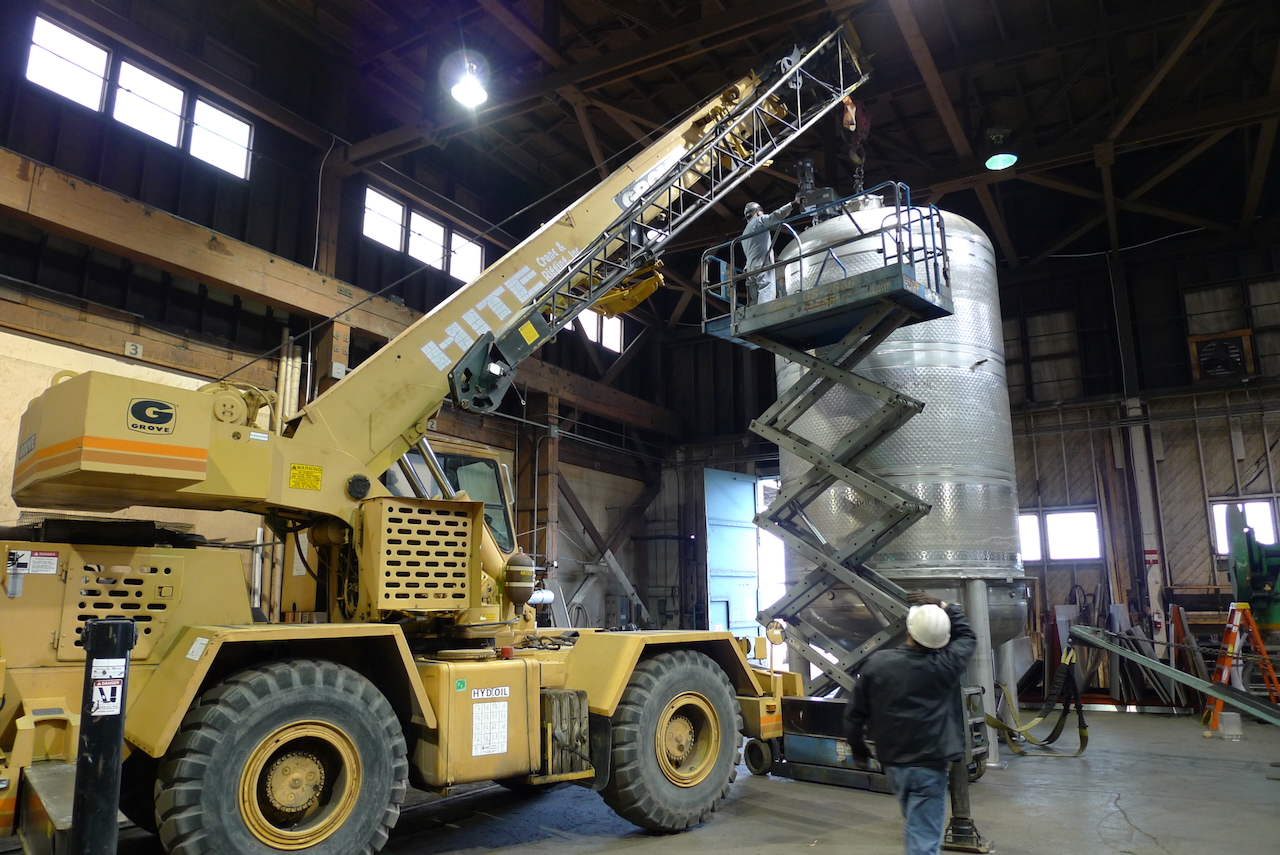
Delivery does not end at the gate. A tank that clears every bridge can still be stopped at the last 50 feet if no one planned the path inside. The questions to ask during design are simple: Will it fit through the door or opening? Can it be tipped upright once it is inside, in the room available? Will it fit the footprint in its final position?
On one distillery project, the answer was to plan the building and the vessels together. Sections of the structure were left open so the tanks could be lowered in through the roof, then the building was closed up around them. That only works when someone is thinking about installation while the vessel is still being designed. See how that came together in the distillery case study.
Why We Design for the Whole Journey
Spokane Stainless treats delivery and installation as part of the design brief, not a handoff at the end. The team steers customers toward freight-friendly dimensions, checks the route and the building fit, and flags anything that would push a load into over-height territory while there is still time to adjust.
The payoff is a vessel that does its job, travels without drama, and slides into place on install day. That is the difference between a tank that is built and a tank that is truly delivered.
Planning a new stainless vessel? Let’s talk through delivery and fit before the dimensions are locked. Start a design conversation.
Frequently Asked Questions
What determines whether a stainless steel tank can be delivered?
Mostly its dimensions. The key figure is total load height, the tank’s diameter plus the trailer height, along with the route and the building it has to enter. These are set during design, which is why deliverability is a design question, not a shipping one.
What is the ideal maximum height for shipping a stainless tank?
As a rule of thumb, keeping total load height under about 16 feet keeps you inside standard freight options. Above that, a move needs an obstruction-free route and a lead car to lift power lines, which adds cost and complexity.
Why does tank diameter matter so much for delivery?
Diameter feeds directly into total load height, and height is much harder to manage on the road than width. Keeping diameter as small as your volume allows is one of the most effective ways to keep freight simple and affordable.
What installation factors should I consider before finalizing a tank design?
Think past the truck. Confirm the vessel can fit through the door or opening, be tipped upright in the available space, and land in its final footprint. On tight sites, the building and the vessel may need to be planned together.
Are freight costs fixed once I have a quote?
No. Freight figures are estimates from third-party carriers and can change. That is why delivery is worth discussing during design, when a small dimensional adjustment can still open up better options.