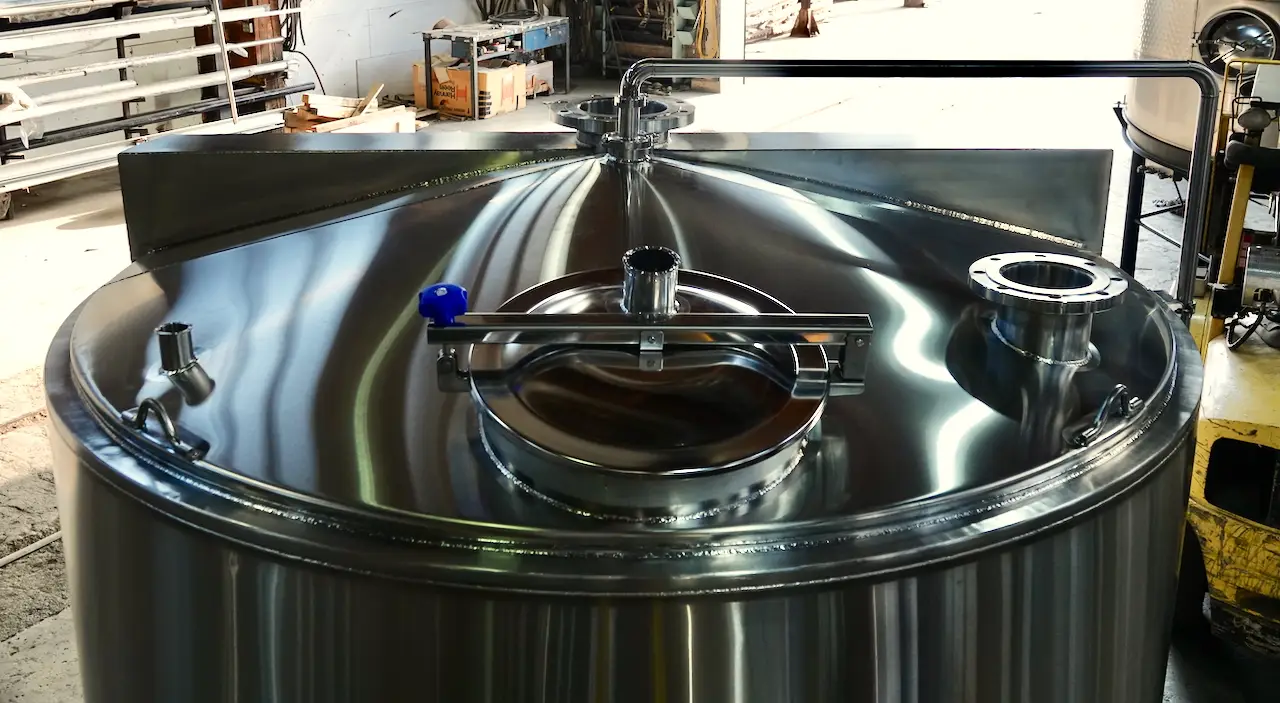
Acetic acid is hard on anything you store it in. Carbon steel corrodes in it, and plastic tanks struggle structurally at bulk volumes. Stainless holds up until the acid finds a weld that never fully penetrates, and in stainless steel acetic acid tanks, that is where most failures begin.
Why Acetic Acid Ruins Almost Everything
Table vinegar runs about 4 to 8 percent acetic acid. Meanwhile, industrial concentrates go much higher, and glacial acetic acid is above 99 percent. Corrosivity climbs with concentration and temperature, and climbs even faster when chlorides enter the product.
Carbon steel corrodes in this service and doesn’t belong in food contact. HDPE and polypropylene tanks hold small volumes of dilute vinegar at room temperature, but bulk storage pushes plastic past what it handles well. The weight of the liquid presses outward on the walls constantly, and plastic slowly deforms under that sustained load (creep), so walls bulge and thin over the years, faster with warm product. Fittings are the usual weak point. Rigid piping holds each fitting in place while the wall around it flexes with every fill, drain, and temperature swing, and that concentrated stress is where cracks start.
For bulk volumes, most engineers land on corrosion-resistant stainless storage. 304L handles dilute acid at ambient temperature, while 316L, with added molybdenum, is the safer choice for higher concentrations, heat, or chloride exposure. That settles the material, but how long the tank lasts depends on how its seams are welded.
The Catch: Stainless Only Wins If the Welds Are Right
Stainless resists corrosion because chromium in the alloy forms a thin oxide film that repairs itself as long as oxygen can reach the metal. Even with flawless base metal, welding can disrupt that film in three ways.
- Incomplete weld penetration. A weld that doesn’t fuse all the way through the joint leaves a notch at the root on the product side. Once acid settles into that crevice, oxygen can’t get in to rebuild the film, and corrosion starts completely out of sight.
- Heat tint. If the inside of a seam isn’t shielded with shielding gas during welding, the root oxidizes into a chromium-depleted layer that corrodes fast unless it is cleaned off and passivated.
- Sensitization. Welding heat can pull chromium out of solution beside the weld and leave the grain boundaries open to attack. Low-carbon grades like 304L and 316L were developed to resist it.
Put together, stainless steel tanks for acetic acid are only as corrosion-resistant as their worst weld, which makes weld penetration a specification issue rather than a finishing detail. A good spec calls for full-penetration welds on product contact seams, back purging or back gouging on root passes, post-weld cleaning and passivation, and inspection by a Certified Welding Inspector. Each protects the weld’s inside face, where the acid sits, by leaving no crevice, oxidized root, or embedded iron behind.
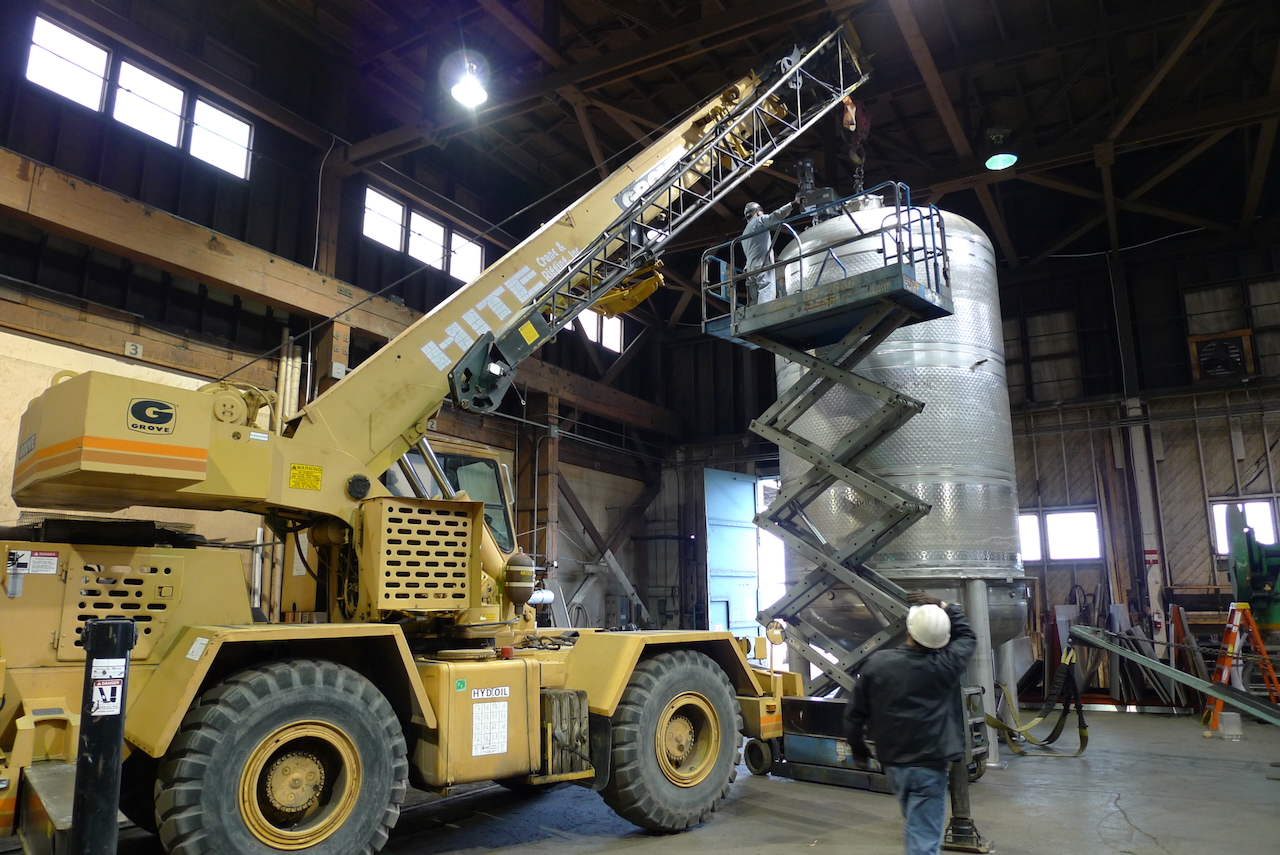
Field-erected tanks add two more risks. Outdoors, a breeze can blow away the shielding gas that protects a weld as it forms. The steel also expands in the afternoon heat and contracts as it cools, so a 20-foot ring welded one afternoon can shrink a third to half an inch overnight and pull the next joint out of line. Field fabrication has its conveniences, but acetic acid welds are too sensitive to their environment for those to matter. We build these tanks in the shop, where every root weld is made indoors under steady conditions.
Passivation That Keeps Working Once the Tank Is in Service
The passive film on stainless steel rebuilds itself whenever oxygen reaches clean metal, so a correctly built tank in aerated acetic acid service keeps renewing its own protection. Instead of wearing down, its corrosion resistance holds up in service year after year.
That only happens when the welds and finish are right from the start. The surface has to be free of heat tint, embedded iron, and crevices, then passivated before the first fill. A crevice never fully rebuilds itself, because oxygen never reaches the bottom of it, and the same acid that leaves a good weld alone will keep working on a bad one.
Food-Grade and Fully Drainable, Even When the Product Fights Microbes
Acetic acid’s low pH stops most microbes, and some buyers read that as a reason to relax on sanitary design. Acetic acid bacteria, the organisms that make vinegar in the first place, tolerate those conditions well, and in diluted products they can form films and mother of vinegar.
Food-grade storage also has to satisfy an auditor. Under FSMA’s preventive controls rule, facilities must keep equipment cleanable and show that sanitation controls work. A tank that won’t drain completely holds product between batches and complicates changeovers.
Drainable design means a sloped or cone bottom with the outlet at the true low point, no dead legs, sanitary fittings, and a specified finish on product-contact surfaces. On a dairy project earlier this year, we finished contact surfaces to 32 µin Ra and ground interior welds flush so CIP could reach every surface. Finishing beyond that depends on how often you change products and how closely your auditor looks.
How Spokane Stainless Builds for the Chemistry in the Tank
Every corrosive storage project at Spokane Stainless Technologies starts with the product. Our engineers ask about concentration, temperature, contaminants, fill-and-drain cycles, and cleaning chemistry before anyone selects a grade, weld procedure, or finish. Engineering to the chemistry is the whole point of custom stainless steel fabrication.
We fabricate in our Spokane Valley shop, with welds inspected by in-house Certified Welding Inspectors. We hold ASME U, UM, and H stamps, build UL 142 tanks for flammable and combustible liquids, and hold a National Board R stamp for repairs to existing code vessels, including those built by other fabricators. The goal is a tank that lasts decades in a service that eats through tanks built to a generic spec.
We build shop-fabricated tanks up to 16 feet in diameter and ship nationwide. Storing something aggressive? Send us your chemistry before fabrication starts, and we’ll match the welds and finish to it. Request a materials and weld review, or contact our engineering team directly.
Frequently Asked Questions
Does acetic acid corrode stainless steel?
Properly fabricated 304L and 316L stainless resist acetic acid well across most concentrations at ambient temperature. Risk rises with heat, very high concentrations, and chloride contamination. Most real-world failures start at welds with incomplete penetration or at heat-tinted surfaces that were never cleaned and passivated.
Why can’t you store acetic acid in plastic tanks?
You can, for small volumes of dilute vinegar at room temperature. At bulk scale, plastic tanks run into size limits, creep under the liquid’s weight, stress cracking at fittings, temperature ceilings, and a shorter service life than stainless. Glacial acetic acid is also a combustible liquid, which brings fire code requirements that plastic storage struggles to meet.
What grade of stainless is best for acetic acid storage?
316L is the usual choice, especially for higher concentrations, heated product, or any chance of chloride contamination. 304L can work for dilute acid stored at ambient temperature. Very hot, concentrated service can call for higher alloys, and a materials review against your actual chemistry is the reliable way to decide.
Why does weld quality matter so much for corrosive storage?
A weld is the most likely place for a stainless tank to lose its corrosion resistance. Incomplete penetration leaves crevices where acid sits without oxygen, unpurged roots leave heat tint, and excess heat can sensitize the metal beside the weld. Any one of these can cause a leak in a tank whose base metal is in perfect condition.