The 42-week lead time your last vendor quoted doesn’t align with the production schedule you need to meet.
For food processors, equipment procurement shouldn’t mean choosing between making your timeline or meeting compliance standards. Seasonal windows close, capacity commitments come due, and expansion plans can’t wait for fabrication schedules that stretch across nearly a year.
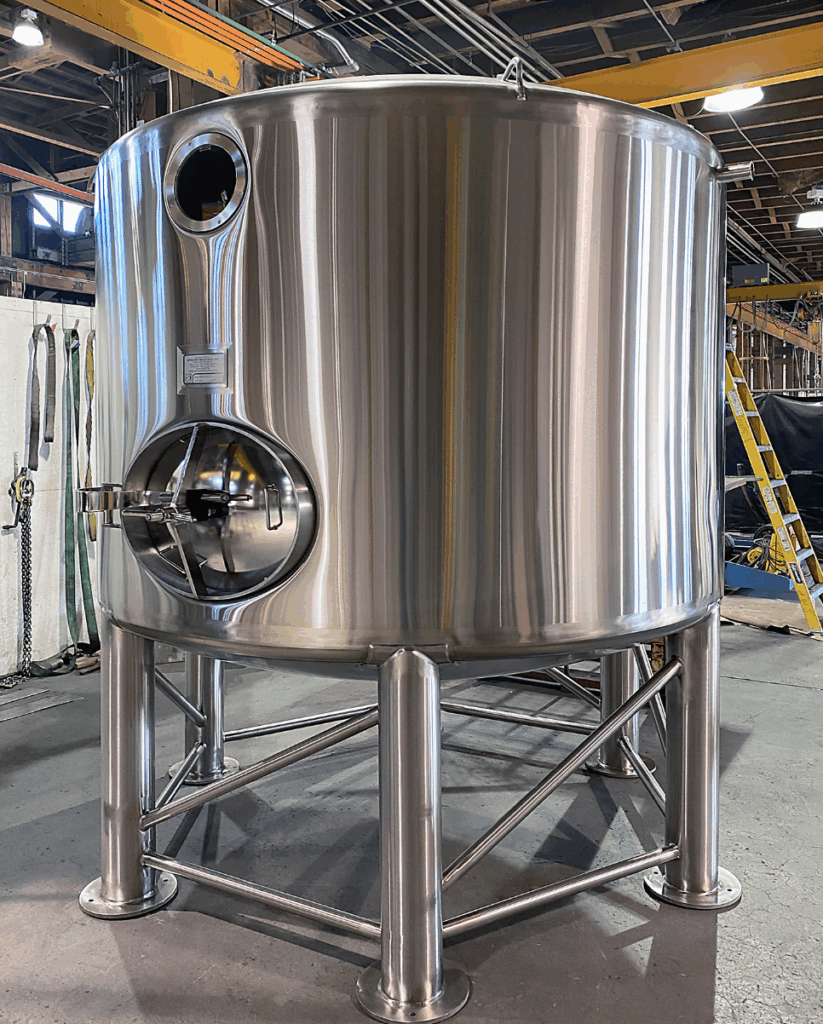
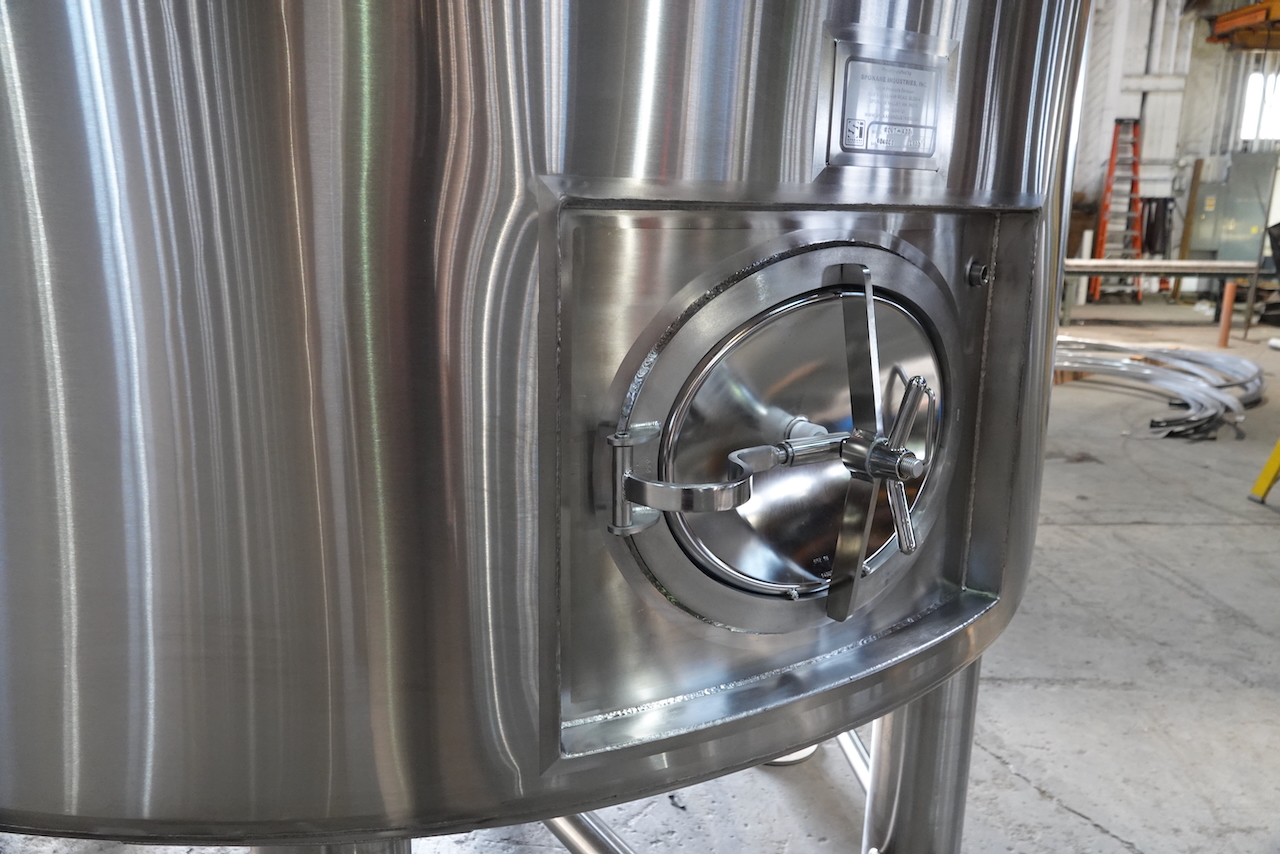
Stainless steel tank fabrication for food processing delivers both speed and compliance when you’re working with partners who understand that production timelines aren’t negotiable.
Why Stainless Steel Is the Standard for Food Processing Equipment
Regulations require food-contact surfaces made from materials that won’t leach contaminants, corrode, or harbor bacteria. Stainless steel meets these requirements while delivering the durability food processing operations demand.
The non-porous surface resists bacterial growth and simplifies clean-in-place (CIP) protocols that are critical when you’re switching between product runs or maintaining sanitation standards between batches.
Corrosion resistance matters when tanks handle acidic ingredients, undergo temperature fluctuations, or face daily exposure to cleaning chemicals. Stainless steel’s chromium oxide layer provides inherent protection that extends equipment service life.
This durability translates to lower total cost of ownership. While initial investment runs higher than alternative materials, reduced replacement frequency, minimal maintenance requirements, and consistent performance across thousands of production cycles make stainless steel the economically sound choice for operations planning beyond the next budget cycle.
The real question isn’t whether to specify stainless steel, it’s finding fabrication partners who understand food processing requirements well enough to engineer vessels that actually work in your operation.
What Food Processors Should Look for in Tank Fabrication
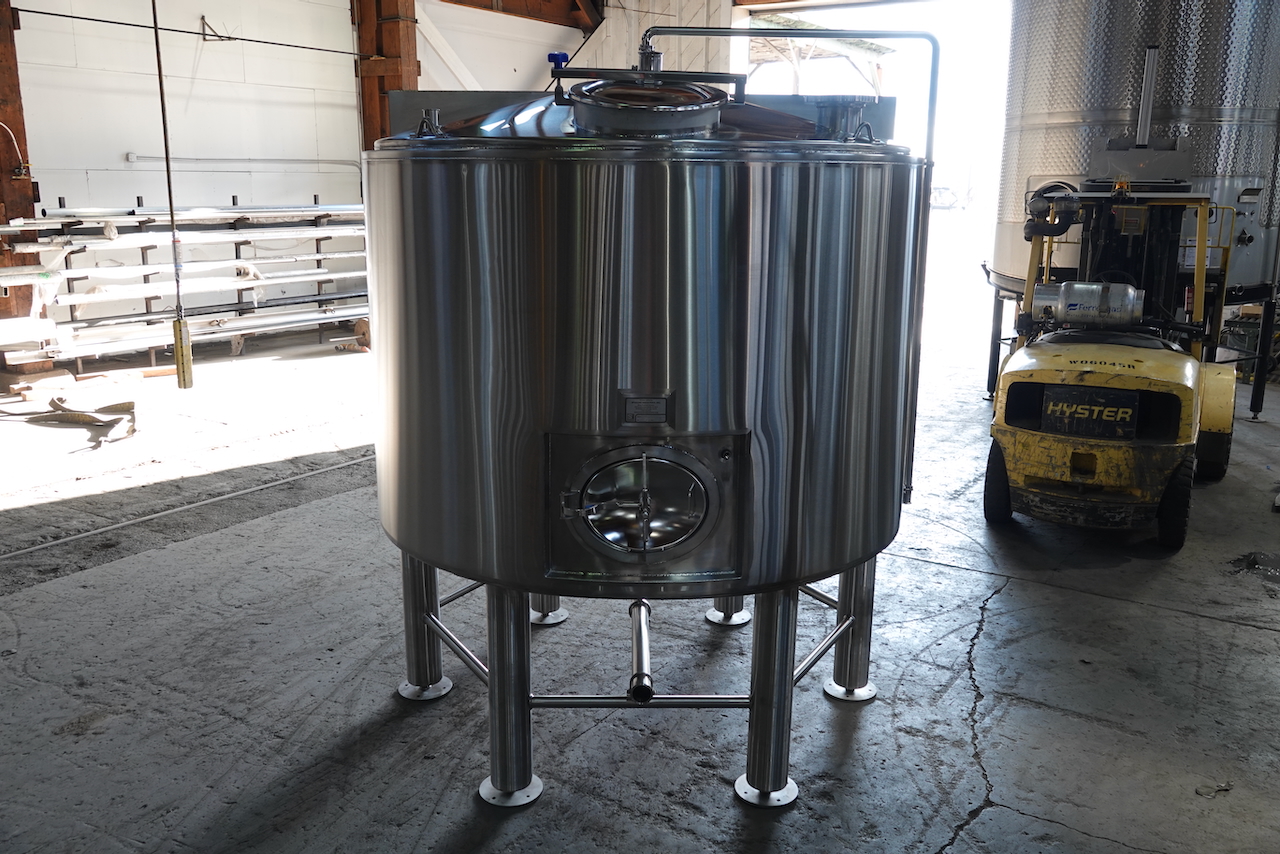
Not every fabricator who can weld stainless steel understands food processing requirements. The distinctions that matter show up in documentation depth, fabrication precision, and whether the partner understands your operational reality.
Compliance That Goes Beyond Surface Claims
Look for food-grade materials with full traceability documentation, not just claims of “food-safe” construction. ASME certification matters when you’re specifying pressure vessels. The fabrication partner should provide complete documentation packages that satisfy inspectors, not make you chase paperwork after delivery.
Customization for Your Actual Process
Dairy processing demands different tank design than beverage production or sauce manufacturing. Your fabricator should engineer agitation systems matched to your product’s viscosity and behavior, specify heating or cooling jackets appropriate for your temperature requirements, and design sanitary connections that meet your cleanability standards.
Partnership Beyond the Purchase Order
The fabrication relationship shouldn’t end at installation. Look for partners offering consultative support during specification, technical guidance on integrating tanks with existing lines, and ongoing capabilities for inspection, repair, and modifications. Equipment operates for decades and your fabricator should be accessible for just as long.
Common Food Processing Applications
Dairy Processing
Milk receiving and storage tanks require sanitary-grade fabrication and CIP-compatible design built to withstand multiple cleaning cycles daily. Cheese vat systems need precise temperature control throughout extended processing periods.
Every connection point, valve, and fitting needs to meet dairy-grade cleanability requirements that go beyond standard food processing.
Beverage Production
Juice blending requires mixing tanks that handle varying viscosities without ingredient separation. Fermentation vessels for kombucha or craft beverages need temperature control and pressure management. Multi-ingredient nutritional drinks demand agitation systems that create uniform blends without damaging sensitive components.
Storage tanks must maintain product integrity across temperature fluctuations and extended hold times.
Sauce and Prepared Foods
Cooking kettles with jacketed temperature control enable precise heat application for sauces requiring specific thermal profiles. Mixing vessels for viscous products like dressings or condiments require agitation powerful enough to blend thoroughly without incorporating excess air.
When formulations include suspensions or emulsions that naturally want to stratify, storage tanks prevent ingredient separation.
Seasonal Processing Operations
Food processors facing harvest peaks or holiday demand often need temporary capacity without permanent facility modifications. Modular systems that deploy for three-month production surges, then store during off-seasons, provide a level of flexibility that fixed installations can’t match.
Portable tanks moving between production lines address capacity constraints without the capital expenditure of dedicated equipment for every line.
Equipment Fabrication That Keeps Pace with Production Demands
When production schedules can’t accommodate 40-week equipment lead times, and seasonal windows won’t wait for standard fabrication timelines, the fabrication partner you choose determines whether your capacity plans succeed or stall.
Spokane Stainless Technologies delivers fabrication with complete documentation and 20-24 week delivery timelines.
Every tank is custom-engineered for your specific needs, working through your process requirements, integration considerations, and compliance standards before fabrication begins.
Spokane provides ongoing support for inspection, maintenance, and modifications throughout the equipment’s service life, ensuring your tanks continue performing as production demands evolve over decades of operation.
Ready to discuss stainless steel tank fabrication for your food processing operation? Contact Spokane Stainless Technologies’ engineering team to review your specifications and timeline requirements.