
Client Name: Confidential Dairy Processor
Industry: Food & Beverage / Dairy Processing
Location: Pacific Northwest, United States
Project Scope: Design and fabricate hygienic stainless steel vessels to replace legacy equipment with sanitation deficiencies, eliminating cleaning dead zones and enabling reliable CIP performance across expanded production capacity.
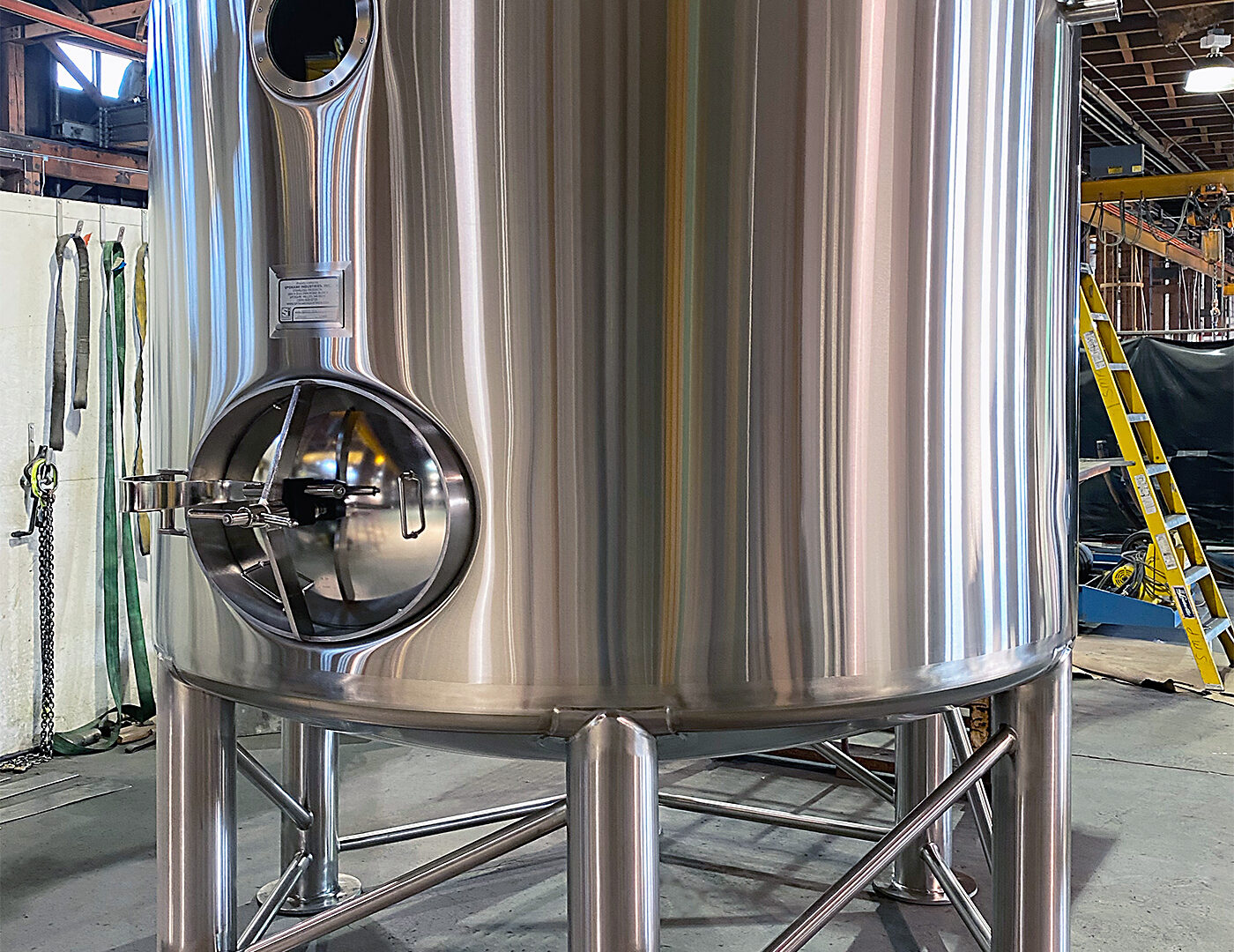
Solution Provided: Spokane Stainless Technologies engineered and delivered custom sanitary vessels built from 304L/316L stainless steel with product contact surfaces finished to 32 µin Ra or better, full-penetration interior welds ground and polished flush, optimized tank geometry for complete drainage, and every port positioned for CIP access—all verified by SST’s in-house quality inspector.
Food and beverage processors face constant scrutiny from auditors, customers, and regulators. Equipment must be cleaned thoroughly, sanitized reliably, and maintained without contamination risk—consequences of failure range from failed inspections to product recalls.
This processor had inherited vessels built to older standards: internal crevices trapping product, rough weld finishes harboring bacteria, and geometries creating dead zones beyond the reach of cleaning solutions. These deficiencies surfaced in swab tests, extended CIP cycles, and sanitation efforts that demanded far more labor than necessary.
With capacity expansion on the horizon, replicating existing design flaws would scale the sanitation burden alongside production volume. The choice was clear: continue working around limitations or invest in equipment engineered for cleanability from the start.

SST applied hygienic design principles at every stage—material selection, weld finish, drainage slope—treating sanitary compliance as the engineering foundation rather than a finishing step. The custom dairy vessels featured:
This transformed sanitation from a workaround-dependent process into a reliable, repeatable operation—equipment proven clean, batch after batch.
Key performance indicators highlighting project success:
The success reinforced a core lesson: hygienic design requires understanding the entire cleaning process, not just the equipment surface. How CIP solution flows, where turbulence creates gaps, how operators inspect what they cannot see—these questions shaped fabrication decisions invisible in the finished product but defining its performance for years. By engineering cleanability into every detail, SST transformed sanitation from a recurring struggle into routine operation.