A pharmaceutical manufacturer discovers contamination in a production batch three days before scheduled shipment. Production halts. The batch is destroyed. Investigation reveals the root cause isn’t a cleaning protocol failure or operator error. It’s the tank itself. Dead zones in the vessel geometry allowed product residue to accumulate where the CIP system couldn’t reach.
Equipment design determines whether thorough sanitation is possible or not. No amount of aggressive cleaning overcomes poor tank geometry, rough surface finishes, or inaccessible weld crevices. Contamination starts with design decisions made during fabrication.
Hygienic design principles in stainless steel tank fabrication address these risks at the engineering stage, before the first batch ever runs.
When Equipment Design Works Against Cleaning Protocols
Standard industrial tanks are built for containment and durability. Food, pharma, and beverage processing require equipment designed for complete cleanability. The difference matters when contamination has regulatory and safety consequences.
Common design flaws create contamination risk that cleaning protocols can’t eliminate:
- Dead zones where flow stagnates and cleaning solutions can’t reach
- Crevices and gaps that trap bacteria between production runs
- Rough surface finishes that harbor microorganisms
- Poor drainage geometry that leaves standing liquid
- Inaccessible areas during CIP cycles
Stainless steel is the baseline material for sanitary applications because its properties meet fundamental hygiene requirements:
- Corrosion resistance withstands aggressive cleaning environments
- Non-porous surfaces prevent bacterial penetration
- Chemical compatibility with sanitizers and processing ingredients
- Durability maintains surface finish through thousands of cleaning cycles
Material choice alone doesn’t guarantee sanitation. If tank design includes areas that can’t be thoroughly cleaned, contamination isn’t a risk, it is inevitable. Stainless steel provides the foundation, but geometry and fabrication quality determine whether that foundation enables or prevents effective sanitation.
Engineering Elements That Enable Complete Sanitation
The gap between tanks that clean effectively and tanks that harbor contamination comes down to six specific engineering principles. These aren’t optional enhancements. They’re fundamental requirements for equipment operating in sanitary environments.
1. Surface Finish Standards
Product contact surfaces require smooth, polished finishes measured in microinches of roughness average (Ra). Surface roughness directly affects bacterial adhesion because microorganisms anchor in microscopic valleys and peaks that standard finishing leaves behind. Proper polishing to specified Ra values creates surfaces where bacteria can’t establish footholds and product residue releases cleanly during washing.
Non-contact surfaces can use standard finishes, but every surface the product touches must meet sanitary finishing standards. The difference between adequate surface finish and inadequate finish is the difference between surfaces that release contamination during cleaning and surfaces that trap it permanently.
2. Eliminating Dead Zones
Dead zones are areas where product flow stagnates and residue accumulates beyond the reach of cleaning solutions. Poor tank geometry creates pockets, corners, and recesses that become permanent contamination sites. Strategic placement of outlets, nozzles, and agitators ensures product movement reaches all interior surfaces. Internal baffles and supports must be designed for cleanability rather than just structural function.
Tanks designed without dead zones achieve complete product evacuation between batches. Tanks with dead zones accumulate residue that becomes bacterial growth sites regardless of cleaning frequency or chemical strength.
3. Full Continuous Welds
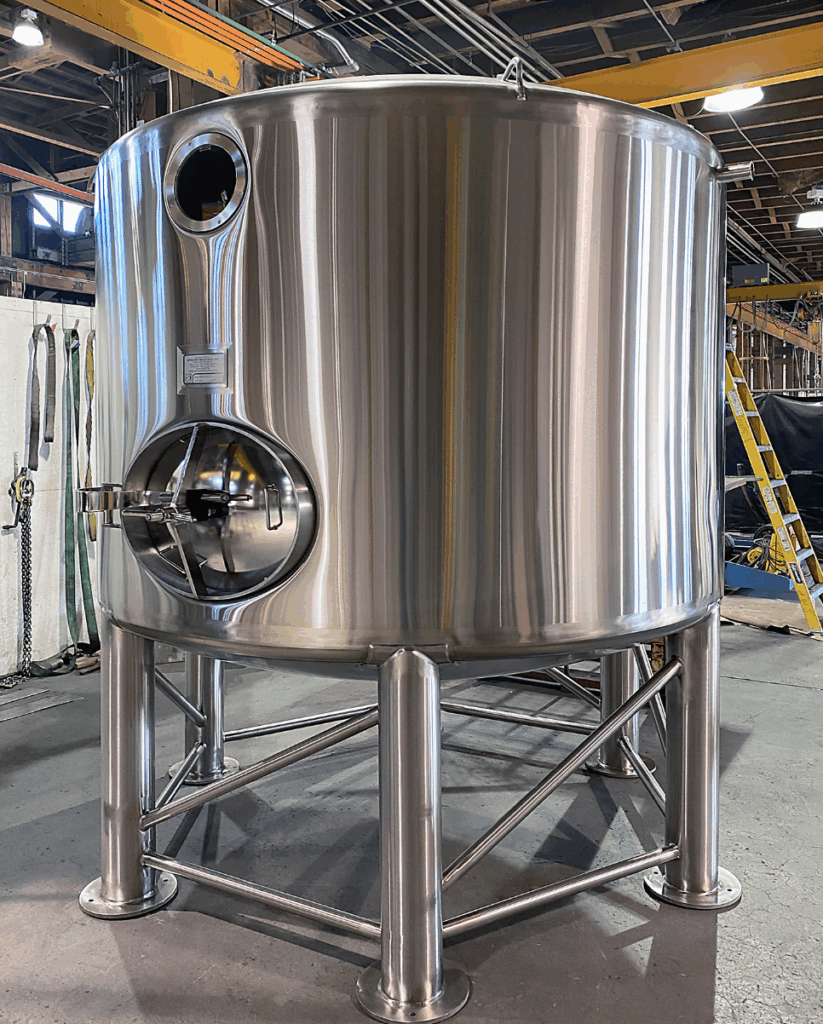
Full continuous welds as required, ground and polished to match the surrounding base material. Welds performed inside and outside eliminate gaps where product and bacteria accumulate in spaces cleaning solutions can’t penetrate. Properly finished welds create continuous, smooth interior surfaces without interruption.
Weld quality directly determines cleaning effectiveness. Seamless weld finishing enables complete sanitation. Poor weld execution creates permanent harboring sites for contamination that compromise every batch the tank processes.
4. Self-Draining Geometry
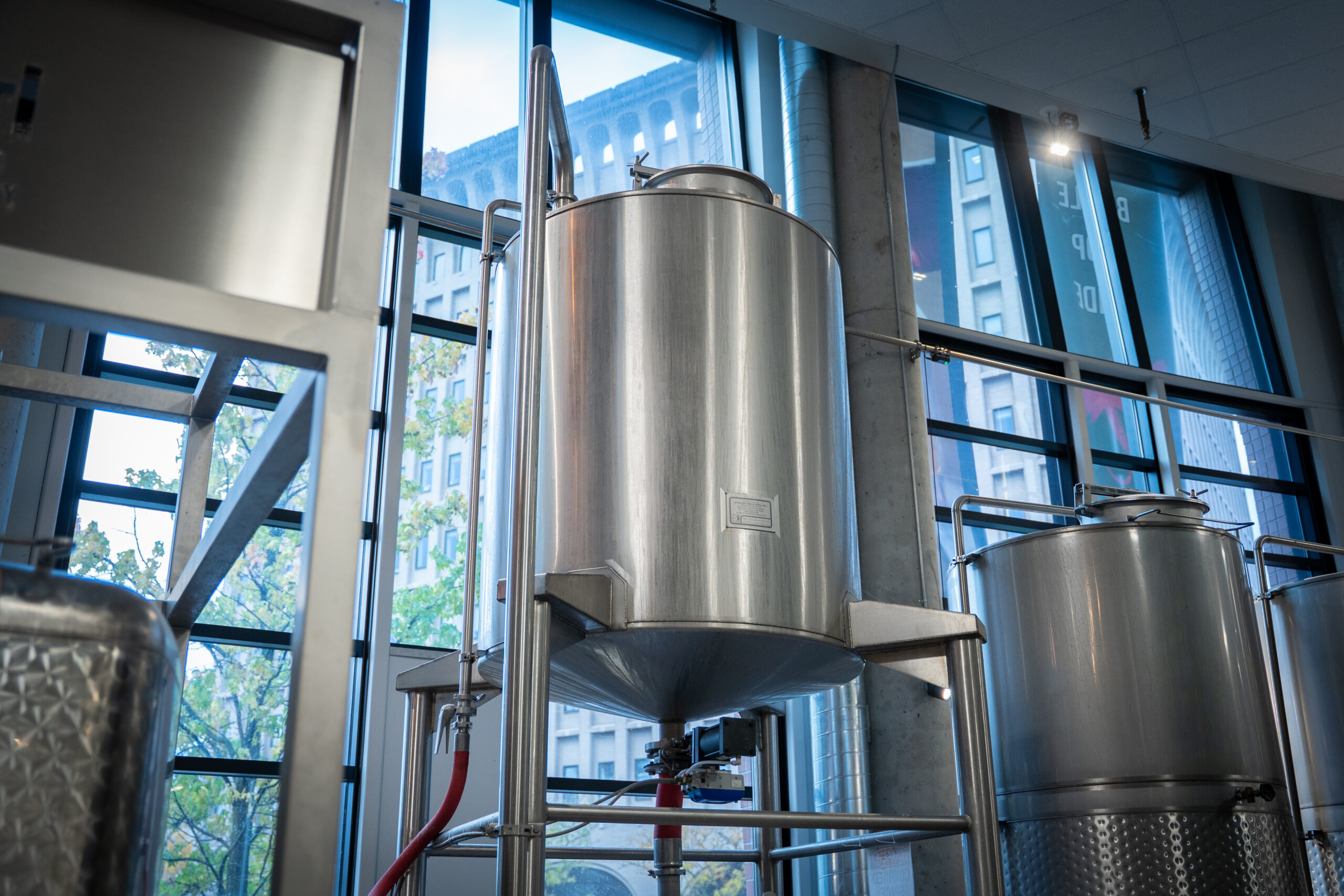
Tank bottom design determines whether equipment drains completely or retains liquid that becomes a contamination source. Sloped floors, conical bottoms, and proper outlet placement eliminate flat surfaces where liquids pool after processing. Strategic angle calculations ensure gravity moves all liquid toward drain points without creating low spots that retain product.
Connection points must be positioned to prevent liquid retention in pipes, valves, and fittings. Tanks that drain completely prevent standing liquid from becoming bacterial growth medium between production runs. Tanks with poor drainage geometry guarantee contamination regardless of cleaning protocol execution.
5. Accessible Design for CIP Systems
CIP system effectiveness depends entirely on whether spray coverage reaches all interior surfaces. Port placement must ensure spray balls or rotary cleaning heads can access every area of the tank interior without shadow zones where spray patterns don’t reach. Design verification through flow modeling confirms coverage before fabrication begins.
Automated cleaning only works when tank geometry allows it to work. CIP systems that miss critical areas create the illusion of sanitation while leaving contamination sites untouched. Proper access design ensures cleaning automation actually delivers the sanitation it promises.
6. Minimizing Penetrations and Joints
Every connection point, port, and penetration in a tank creates a potential contamination site. Strategic consolidation of necessary openings reduces the number of joints that require sealing and cleaning. Where penetrations are unavoidable, hygienic connection designs prevent gaps and crevices at junction points.
Reducing tank complexity reduces contamination risk. Simple geometries with minimal penetrations are easier to clean, easier to validate, and less likely to develop sanitation failures over time. Complex assemblies with multiple connection points create multiple failure opportunities that compound contamination risk.
How Sanitation Requirements Vary by Sector
Different industries face different contamination challenges, but hygienic design principles remain constant across all sanitary applications.
Food & Beverage Processing requires high-frequency cleaning between product changeovers to prevent allergen cross-contamination. Extended production runs demand validated cleaning protocols that equipment geometry must support.
Pharmaceutical Manufacturing operates under ultra-sanitary requirements where contamination carries patient safety implications. Equipment must support rigorous cleaning validation protocols that document sanitation effectiveness.
Dairy Processing faces milk protein residue challenges that require frequent CIP cycles, often multiple times daily. Biofilm prevention in surfaces with extended product contact becomes critical to process integrity.
The contamination risks differ by sector, but the solution remains the same. Hygienic tank design principles address sanitation requirements regardless of what the tank processes.
Spokane Stainless Technologies: Engineering Sanitation Into Every Design
Contamination issues in processing equipment trace back to design decisions made during fabrication. Cleaning protocols can’t overcome poor tank geometry, inadequate surface finishes, or inaccessible weld crevices. The equipment either enables thorough sanitation or makes it impossible.
Spokane Stainless Technologies fabricates custom stainless steel tanks with hygienic design principles integrated from initial engineering. Surface finishing, weld quality, and drainage geometry are designed specifically for sanitary applications serving food processing, pharmaceutical manufacturing, and beverage production facilities. Complete design consultation matches tank specifications to sanitation requirements and production processes.
Sanitation isn’t a feature added after fabrication. It’s engineered into the tank design from the start. Properly designed stainless steel tanks make thorough cleaning possible. Poorly designed tanks make contamination inevitable.
Learn more about hygienic stainless steel tank design or contact Spokane Stainless Technologies to discuss sanitary tank requirements for your operation.