0400 hours. Four hours to turn around three rotary aircraft. With standard gravity draining, that’s twelve-plus hours of work compressed into four. The math doesn’t work.
Your crew isn’t the problem. Equipment designed for commercial aviation is being pressed into tactical service. When fuel handling can’t keep pace with operational tempo, flight schedules slip and someone explains to command why aircraft aren’t mission-ready.
Commercial fuel carts are built for flexible schedules and controlled environments. Tactical operations require equipment engineered for compressed timelines, all weather conditions, and zero margin for delay.
Here’s what transforms a fuel cart into a tactical asset.
What Separates Tactical Fuel Handling From Commercial
Commercial fuel carts are built for controlled environments with climate-controlled hangars, flexible maintenance schedules, single aircraft types, and predictable conditions where time windows can expand if needed.
Tactical operations break that equipment because the demands are fundamentally different:
- Compressed maintenance windows measure timeliness in hours rather than days, locking operations to mission schedules that cannot shift or extend regardless of equipment limitations.
- All-weather operation means equipment must perform reliably in extreme heat, desert cold, heavy precipitation, and corrosive salt air without the option to delay work until conditions improve.
- Zero-spillage tolerance transforms what would be a cleanup task on commercial ramps into a safety incident that immediately halts all operations in confined tactical spaces.
- Speed without safety compromise demands equipment that delivers rapid defueling while maintaining strict safety protocols, since faster operations that introduce risk are operationally worthless.
- Stress-ready operation accounts for crews working under intense pressure, physical fatigue, and poor lighting conditions by designing equipment that performs consistently without demanding perfect operator technique.
If your operation requires mission-ready aircraft on rigid timelines, your fuel handling equipment needs to match that operational tempo. Not because tactical-grade is premium, but because it’s purpose-built for how you actually work.
Engineering Elements That Define Tactical Capability
1. Vacuum- Assisted Recovery Speed
The difference between vacuum-assisted defueling and gravity draining is measured in hours. Gravity methods can take multiple hours per aircraft, creating bottlenecks that cascade through your entire maintenance schedule. Vacuum systems with direct tank sump coupling drastically reduce defueling time while eliminating manual fuel transfer steps that slow the process and introduce spillage risk.
The operational impact is straightforward. You either meet compressed maintenance windows or you explain to commanders why aircraft aren’t flight-ready on schedule.
2. Dual-Containment Architecture
Double-walled construction with integrated overflow protection isn’t a nice-to-have in tactical environments. A fuel spill on a commercial ramp means cleanup and paperwork. A spill in tactical operations means grounded aircraft, safety violations that halt operations entirely, and mission delays with cascading effects across the flight schedule.
Dual containment prevents safety incidents that stop operations, environmental violations that trigger audits, and the operational shutdown that happens when containment fails.
3. Integrated Dual-Stage Filtration
Aviation-grade filtration systems remove contamination during the recovery process itself. Fuel comes out of the aircraft and emerges filtered with no secondary handling, no separate filtration step, and no additional time added to the process.
This eliminates the defuel-filter-refuel cycle that effectively doubles fuel handling time. One operation instead of three means your crew can move to the next aircraft while fuel quality stays protected.
4. Static Dissipation Engineering
Bonded and grounded chassis systems, aviation-grade static dissipating hoses, and visible grounding verification before fuel flow begins aren’t just operator procedures. They’re engineered protections built into the equipment itself.
The tactical principle is simple. Equipment that requires perfect operator behavior under time pressure isn’t mission-ready. Tactical design assumes compressed timelines, crew fatigue, and imperfect conditions, then protects crews anyway through engineering rather than relying solely on procedures.
5. Environmental Resilience
Tactical operations don’t pause for weather. Equipment must function in temperature extremes, precipitation, high humidity, salt air environments, and prolonged outdoor storage without performance degradation. This requires corrosion-resistant materials, weather-sealed electrical systems, and UV-stable components that withstand continuous environmental exposure.
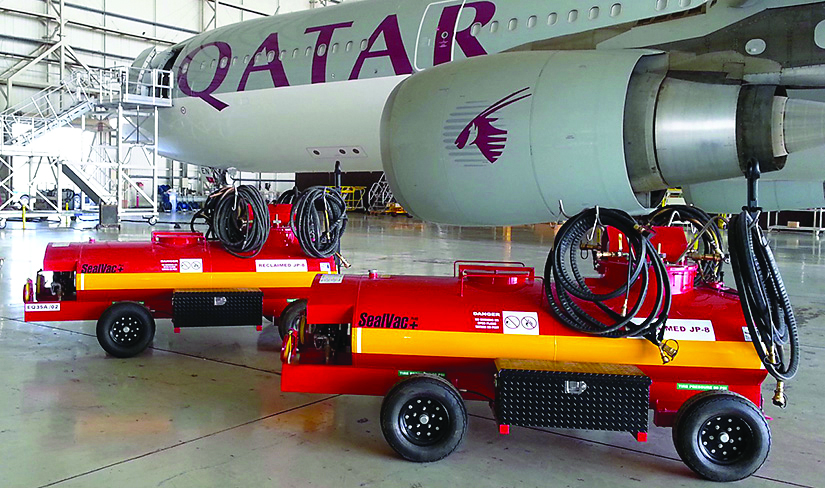
Most commercial fuel carts are designed for climate-controlled maintenance hangars with predictable conditions. Tactical carts are designed for wherever aircraft operate, including environments where ideal conditions don’t exist and never will.
What Tactical Design Means in Practice
The difference between commercial and tactical equipment becomes clear when you map it against actual operational constraints. Take the same scenario from the opening: three rotary wing aircraft that each need defueling, fuel system inspection, and refueling before an 0800 departure. You have four hours total.
With commercial or manual equipment, the first aircraft is still gravity draining through hours one and two. Fuel drips slowly through standard hoses into collection containers that require manual handling and transfer. By hour three, crew members are manually filtering recovered fuel while the second aircraft begins its defueling process. When hour four arrives, only one aircraft is complete and refueled. The maintenance window is exceeded, the mission timeline is impacted, and someone is explaining the delay up the chain of command.
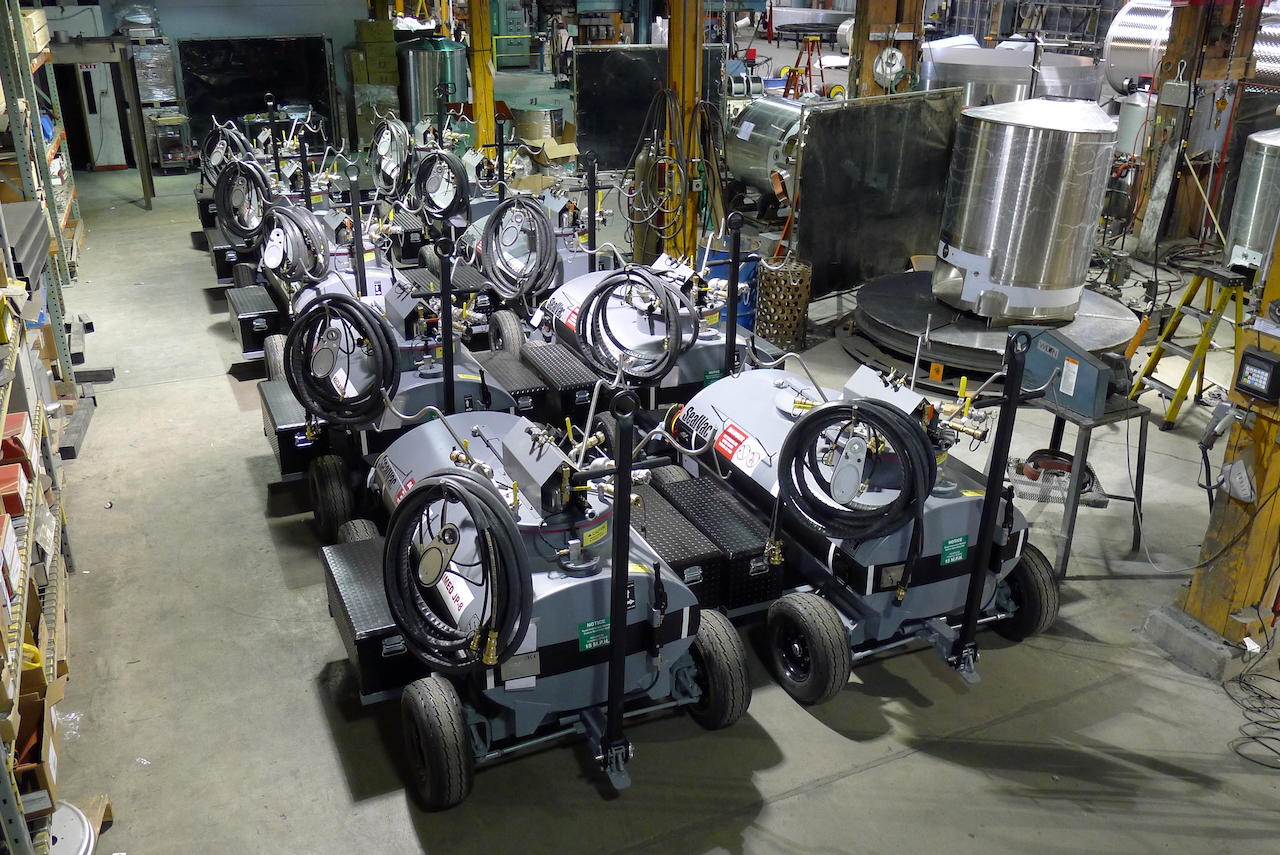
With tactical-grade equipment, vacuum-assisted systems pull fuel directly from the tank sumps through aviation-grade static dissipating hoses at significantly faster rates. The first aircraft is defueled within the first hour and moves immediately into the inspection phase. By hour two, the second aircraft is complete while the first is already refueled and cleared for flight. The stainless steel double-walled containment tank handles all three aircraft with integrated dual-stage filtration processing fuel during recovery. By hour three, all three aircraft are defueled, inspected, refueled, and mission-ready with time margin remaining in the window.
Same maintenance crew. Same four-hour constraint. Same three aircraft requiring the same procedures. The only variable that changed is equipment capability.
This isn’t about your team working harder or cutting corners to meet timelines. It’s about equipment that matches the pace tactical operations demand.
Who Needs Tactical Grade?
Commercial fuel carts work fine when maintenance schedules are flexible, you service one aircraft type in climate-controlled facilities, and time windows can expand as needed.
You need tactical-grade equipment when compressed maintenance windows are standard procedure, you service multiple aircraft types with different fuel configurations, operations run in all weather conditions, high operational tempo is baseline, and delays create mission-level consequences.
The decision comes down to one question: when fuel handling slows you down, what’s actually at stake? If the answer includes mission readiness, flight schedules, or operational availability, you’re operating in tactical territory.
Purpose-Built for Mission Requirements
Equipment designed for commercial aviation doesn’t match tactical operational demands. What feels like normal friction is actually the measurable gap between commercial capability and tactical requirements.
Spokane Stainless Technologies engineers tactical fuel systems specifically for military and aerospace operations. Our systems currently serve Air Force, Navy, and Coast Guard operations and are field-proven from desert installations to maritime carrier operations.
We provide complete lifecycle support from specification through decades of operation, including technical assistance for equipment we didn’t manufacture.
Operations that demand mission-ready aircraft on non-negotiable timelines deserve equipment engineered to match that standard. Tactical fuel systems aren’t better fuel carts. They’re fundamentally different equipment for different operational realities.
The question isn’t whether tactical-grade equipment is worth the investment. The question is: do operational demands require it?
Learn more about Spokane Stainless Technologies‘ tactical fuel systems or contact us to discuss fuel handling requirements for your operation.