Spokane Stainless Technologies | Engineering Division
Run your hand along the inside of a stainless steel tank and it feels smooth. Put that same surface under a microscope and it looks like a mountain range: peaks, valleys, cracks. That gap between what your hand feels and what is actually there is what surface finish is all about. In pharmaceutical work, it is one of the most consequential lines on the drawing.
Here is a number that makes it real. A good pharmaceutical finish is specified at about half a micrometer of roughness, and a single bacterium is roughly one micrometer across. The bumps in the steel are the same size as the organisms you are trying to keep out of your product.
What Ra Is
Roughness is measured as Ra, the average height of the peaks and valleys across a surface. Lower Ra means smoother. It gets written in either micrometers or microinches, a half a micrometer is about 20 microinches. That single number is what specification will be, which is why it is worth understanding before anything else on the drawing.
The FDA rule behind all of it is equally short. Surfaces that touch your product “shall not be reactive, additive, or absorptive” in a way that alters the drug (21 CFR 211.65). Absorptive is the word that matters, because a surface that soaks things up is a surface that cannot pass an audit, and surface roughness is surface absorption. This trait depends on what was done to the steel after it was formed.
What a Smooth Surface Buys You
It cleans faster and more completely. Think of a kitchen counter versus the grout between the floor tiles. The counter wipes clean in one pass. The grout never does. Not because more dirt lands on the grout, but because the cloth slides over the top and never gets down inside the grout very well . The inside of a tank behaves the same way. A cleaning cycle sprays chemistry across the surface, and anywhere the chemistry cannot reach into, residue stays behind.
It gives bacteria less to hold onto. Bacteria have to attach before they can multiply. Once attached, they build a colony and wrap it in a slime layer that blocks the chemicals meant to kill them. Surface finish is the least expensive place in the entire process to stop that sequence before it starts.
It lasts longer. Stainless steel pits and corrodes for four main reasons: chlorides, heat, loose iron on the surface, and dirt pressed into the metal. A rough surface holds more of all four and a smooth one holds less. That difference shows up as years of service rather than an early replacement.
It gives you something to hand an auditor. The first three are performance. This one is paperwork, and paperwork is how pharmaceutical projects get approved. Finish is a number you can measure, measure again, and put in a document. Very little else on a tank is that simple to prove.
Four Steps From Rough Steel to Clean Surface
Four things turn plain steel into a pharmaceutical surface. The words get used interchangeably in purchasing conversations, but they are four different jobs and the order matters.
1. Grinding. Knock the high spots down: weld beads, mill scale, anything standing proud of the surface. This makes the steel flat. It does not make it smooth.
2. Mechanical polishing. Sanding, at industrial scale. Belts and wheels, each pass using finer grit than the last, the way you would finish a piece of furniture. Most of the smoothness in a finished tank comes from this step.
3. Electropolishing. The tank goes into a chemical bath and gets wired to a power supply. Metal comes off the surface one atom at a time, fastest from the high points. Two useful things result. The surface gets smoother than sanding alone can make it.
4. Passivation. Not a polishing step at all, but a chemical rinse, usually citric or nitric acid. Stainless steel resists rust for a reason that has nothing to do with coatings. The chromium inside it reacts with air and forms a protective skin thinner than a soap bubble. Building a tank scuffs that skin and leaves loose iron sitting on the surface. Passivation washes the loose iron away and lets the skin rebuild clean. It changes nothing a roughness gauge can measure but it change how long the tank lasts.
The Step That Gets Left Off
Electropolishing looks like the finish line, and it is not. The protective skin that forms right after electropolishing is real. But it does not hold enough chromium to meet what high-purity work asks for. Passivation after electropolishing is what closes that gap. So a drawing reading “316L, electropolished” has handled the texture and stopped one step short of the chemistry. Ask for both.
The ASME BPE Finish Codes
ASME BPE is the industry standard for bioprocessing equipment, and it assigns every finish a designation. These are the codes that belong on your drawing.
| Designation | Method | Max Ra |
| SF1 | Mechanically polished | 20 µin (0.51 µm) |
| SF2 | Mechanically polished | 25 µin (0.64 µm) |
| SF3 | Mechanically polished | 30 µin (0.76 µm) |
| SF4 | Electropolished | 15 µin (0.38 µm) |
| SF5 | Electropolished | 20 µin (0.51 µm) |
| SF6 | Electropolished | 25 µin (0.64 µm) |
Reading the table: “mechanically polished” is the sanding step, and a lower Ra is smoother. One caution, though, because these designations cover more than roughness. Each also sets limits on pits, scratches, and inclusions in the metal, along with a defined protocol for how the measurement gets taken. That is what lets you verify a tank on arrival rather than trusting a single gauge reading.
Welds Are Where This Gets Decided
A tank is not one surface. It is sheets of steel joined by welds. A weld is a different surface than the plate on either side of it, the way a seam is a different surface than the fabric it joins. That makes welds the place where surface quality is genuinely won or lost.
A good sanitary weld has three qualities:
- It goes all the way through, so no hollow space sits behind it.
- Its surface is smooth and level with the plate around it.
- It sits out on a flat surface rather than tucked into a corner.
The third one is a design feature rather than welding skill. Corners are the hardest place for a cleaning cycle to reach, so a weld placed in a corner creates a spot nobody can clean properly. That gets decided long before anyone strikes an arc. So welds are not a separate topic from finish. They are the same topic, at the spot that matters most. A specification that names a roughness number but says nothing about welds has covered the easy 95 percent of the surface.
Why 316L and Not Plain 316
The L means low carbon: 0.03 percent maximum instead of 0.08 percent, under ASTM A240. Carbon causes a specific problem when you weld. The heat pulls chromium out of the steel beside the weld and locks it up with that carbon. The chromium that was protecting that zone is now tied up and cannot do its job. Less carbon means less of this happens, so the rust resistance you specified survives the heat that built the tank.
What to Put on Your Specification
Seven lines:
- Steel grade. 316L for anything touching pharma product.
- Finish. A roughness number, the SF designation if you work to ASME BPE, and a yes or no on electropolishing. “Sanitary finish” is too vague to hold anyone to.
- Passivation. Whether you want it, by what method, and how it gets verified. This is the line most often missing.
- Welds. Penetration and smoothness requirements, plus the inspection documentation you expect in hand.
- Cleaning built in. Tanks get cleaned and sterilized in place, without being taken apart. That has to be designed in from the first sketch: full drainage, spray coverage everywhere, no dead-end pipe stubs. Building it in is straightforward. Adding it later is not.
- Traceability. Documentation that tracks the steel from the mill batch to the finished tank.
- Factory Acceptance Testing. Prove the tank meets your process before it ships, not after it is bolted down.
If You Are Comparing Bids Rather Than Writing the Spec
Two honest bids on the same tank can differ by a wide margin, and usually it is because they are not quoting the same surface. Three questions separate them:
- Does the quote include passivation after electropolishing, or does it stop at electropolishing?
- What SF designation or Ra number is quoted, and does it cover every product-contact surface or only the shell?
- What weld inspection documentation comes with the tank?
If the answers differ, the tanks differ, than the two numbers in the two different bids are not comparable. This is also the cheapest moment to sort it out. Changing a finish requirement after fabrication begins means reworking a surface that is already built. Requalifying a tank already in service means pulling it out of production, which is a different order of cost entirely.
How Much Is Enough?
ASME BPE is a voluntary industry standard, not a law, and the FDA does not require SF4. What the FDA requires is that you can show the equipment gets clean and stays clean. EHEDG, the European hygienic design group, arrives at the same destination from a different path, it allows rougher surfaces where testing proves they still clean up properly.
So the right finish is the one your cleaning validation can defend. Electropolishing a jacket exterior, or calling out SF4 where product never touches, is budget that would do more good elsewhere in your system. That is a good conversation to have while the drawing is still a drawing.
How Spokane Stainless Technologies Approaches Pharmaceutical Vessel Fabrication
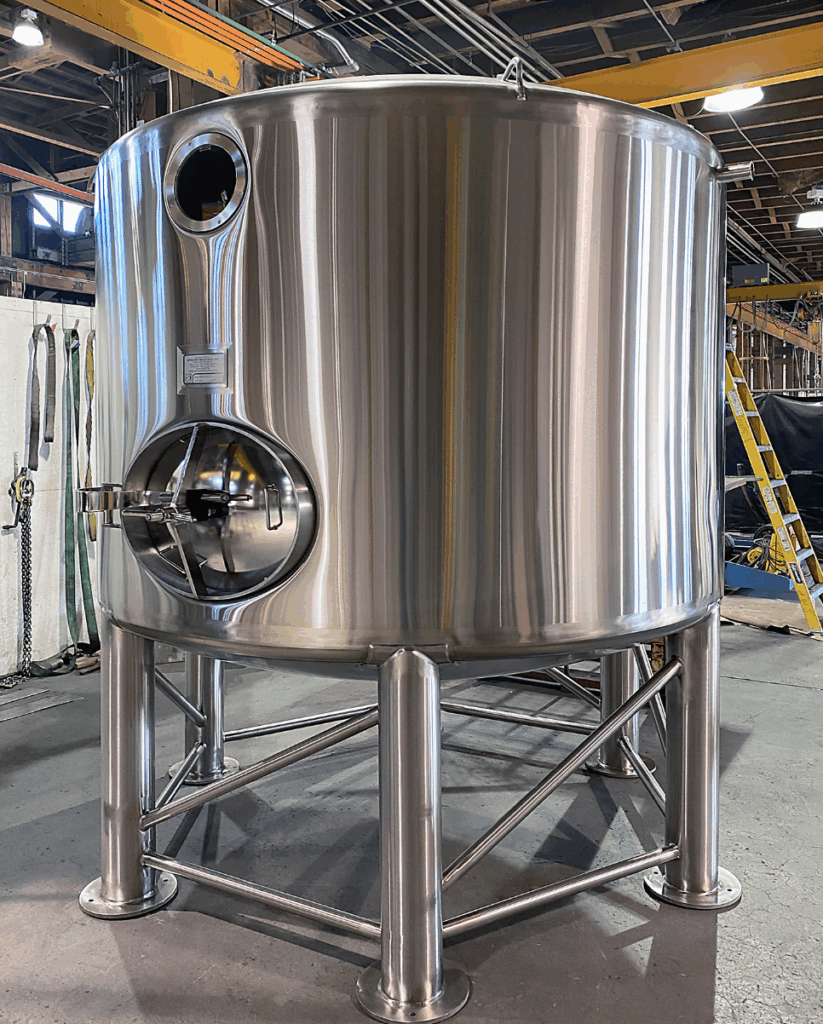
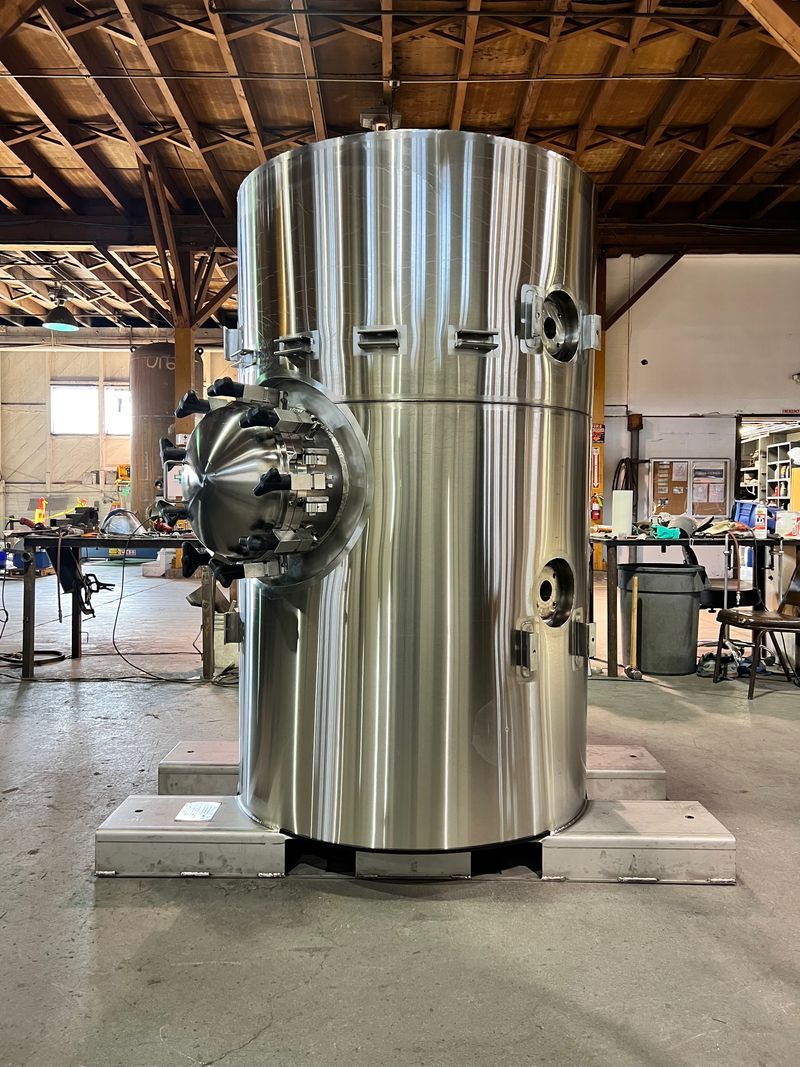
Our pharmaceutical vessel fabrication starts with 316L on every product-contact surface, electropolished to your specification, with documentation tracking the steel from mill batch to installed tank. Certified weld inspectors work in our shop and on the floor, so weld quality gets watched while the welding happens rather than judged after the fact.
We design to FDA and cGMP requirements and to ASME BPE surface and weld criteria. Tanks are built as custom engineered code tanks under our ASME U and U/M stamps and National Board R stamp. Jacketed, insulated, rated for vacuum or pressure, with mixing sized to your process instead of pulled off a shelf. Factory Acceptance Testing is available, so you can watch the tank meet your process specification before it leaves Spokane.
One thing we sort out early on every pharmaceutical job, because it keeps the documentation clean. USP Class VI is not a steel standard. It is a safety rating for plastics and rubber, which on a tank means the gaskets, seals, and hoses. We list those separately from the shell, so your compliance record covers every wetted part rather than only the metal ones.
Send Us the Specification Before You Send It Out for Bid
Our engineers will read your finish and passivation call-outs, your weld and inspection requirements, and your cleaning design against what your process actually needs. Then we will tell you what is solid, what is worth adding, and where you may be paying for more than you need. You do not need drawings to start. A description of your process and a target roughness number is enough.
If you are not the one writing the specification, send this to whoever is. Or call us. We will walk your team through those three questions on whatever quotes you already have, including quotes that are not ours.
Call 509.921.8850 or request a quote.
Frequently Asked Questions
What surface finish is required for a pharmaceutical vessel?
For pharmaceutical product-contact surfaces, the commonly specified range is 15 to 30 microinches Ra (0.38 to 0.76 micrometers). ASME BPE designations SF1 through SF3 cover mechanically polished surfaces in that band, and SF4 through SF6 cover electropolished surfaces. There is no single required number. The FDA sets no numeric surface finish requirement in 21 CFR 211.65, so the correct finish is the one your cleaning validation can defend for your specific process.
What does Ra mean in a surface finish specification?
Ra is the arithmetic average roughness of a surface, meaning the average height of its peaks and depth of its valleys. A lower Ra number means a smoother surface. It gets written in either microinches or micrometers, where 20 microinches equals about 0.51 micrometers. Ra matters in pharmaceutical work because surface irregularities at half a micrometer are the same size as a single bacterium, which measures roughly 0.5 to 2 micrometers.
What are the ASME BPE surface finish designations?
ASME BPE assigns six designations to metallic process-contact surfaces. SF1, SF2, and SF3 are mechanically polished to maximum Ra values of 20, 25, and 30 microinches. SF4, SF5, and SF6 are electropolished to maximum Ra values of 15, 20, and 25 microinches. Each designation is more than a roughness limit. It is an acceptance package that also governs allowable pits, scratches, and inclusions, plus a defined protocol for how measurements are taken.
What is the difference between electropolishing and passivation?
Electropolishing changes the texture of the surface. Passivation changes its chemistry. In electropolishing, the vessel becomes the anode in an electrolytic bath and metal is removed one atom at a time, fastest from the high points, which lowers Ra and strips away the worked layer left by mechanical polishing. Passivation is a chemical rinse, usually citric or nitric acid, that removes free iron so a chromium-rich oxide film can form. It does not change roughness at all.
Do you need to passivate stainless steel after electropolishing?
Yes, for high-purity pharmaceutical service. The oxide film that reforms immediately after electropolishing is passive, but Astro Pak’s published testing shows it typically does not carry enough chromium to reach the chromium-to-iron ratios high-purity work requires. Passivation after electropolishing is what brings the surface to a Cr:Fe ratio at or above 2:1. A specification reading “316L, electropolished” has addressed the texture and stopped one step short of the chemistry.
Is electropolishing required for a pharmaceutical vessel?
Not automatically. ASME BPE is a voluntary consensus standard rather than a federal regulation, and the FDA does not require SF4 or any other electropolished designation. What the FDA requires is that you can demonstrate the equipment gets clean and stays clean. EHEDG takes the same position from the other direction, permitting rougher surfaces where testing shows the required cleanability is achieved. Electropolishing a surface that never contacts product adds cost and lead time without adding compliance.
Does the FDA require a specific surface finish for pharmaceutical equipment?
No. 21 CFR 211.65 contains no numeric surface finish requirement. It states that equipment surfaces contacting components, in-process materials, or drug products “shall not be reactive, additive, or absorptive so as to alter the safety, identity, strength, quality, or purity of the drug product beyond the official or other established requirements.” The obligation is performance-based, which is why cleaning validation, not a single Ra number, is what an inspector evaluates.
Why is 316L specified instead of 316 for pharmaceutical vessels?
316L is the low-carbon version of 316, limited to 0.03 percent carbon against 0.08 percent under ASTM A240. During welding, heat causes chromium to combine with carbon and precipitate as chromium carbide at grain boundaries in the heat-affected zone, leaving that zone depleted of the chromium that provides corrosion resistance. Lower carbon reduces that precipitation, so a welded 316L vessel retains the corrosion resistance the grade was selected for.
Does USP Class VI apply to stainless steel?
No. USP Class VI is a biological reactivity classification defined in USP General Chapter 88, and it applies to plastics, polymers, and elastomers rather than metals. On a pharmaceutical vessel, USP Class VI is relevant to the gaskets, seals, and hoses, not the stainless steel shell. Listing USP Class VI alongside a steel grade is a common specification error. The two should be called out on separate lines so the compliance record covers the full wetted path.
How do you verify the surface finish on a vessel when it is delivered?
Surface finish is verified with a profilometer, a gauge that measures Ra directly on the surface, following the reading protocol defined in ASME BPE Part SF. Because an SF designation also limits pits, scratches, and inclusions, verification includes visual inspection against those criteria rather than a single roughness reading. Factory Acceptance Testing before shipment lets you confirm finish, weld quality, and process performance while the vessel is still in the fabricator’s shop.